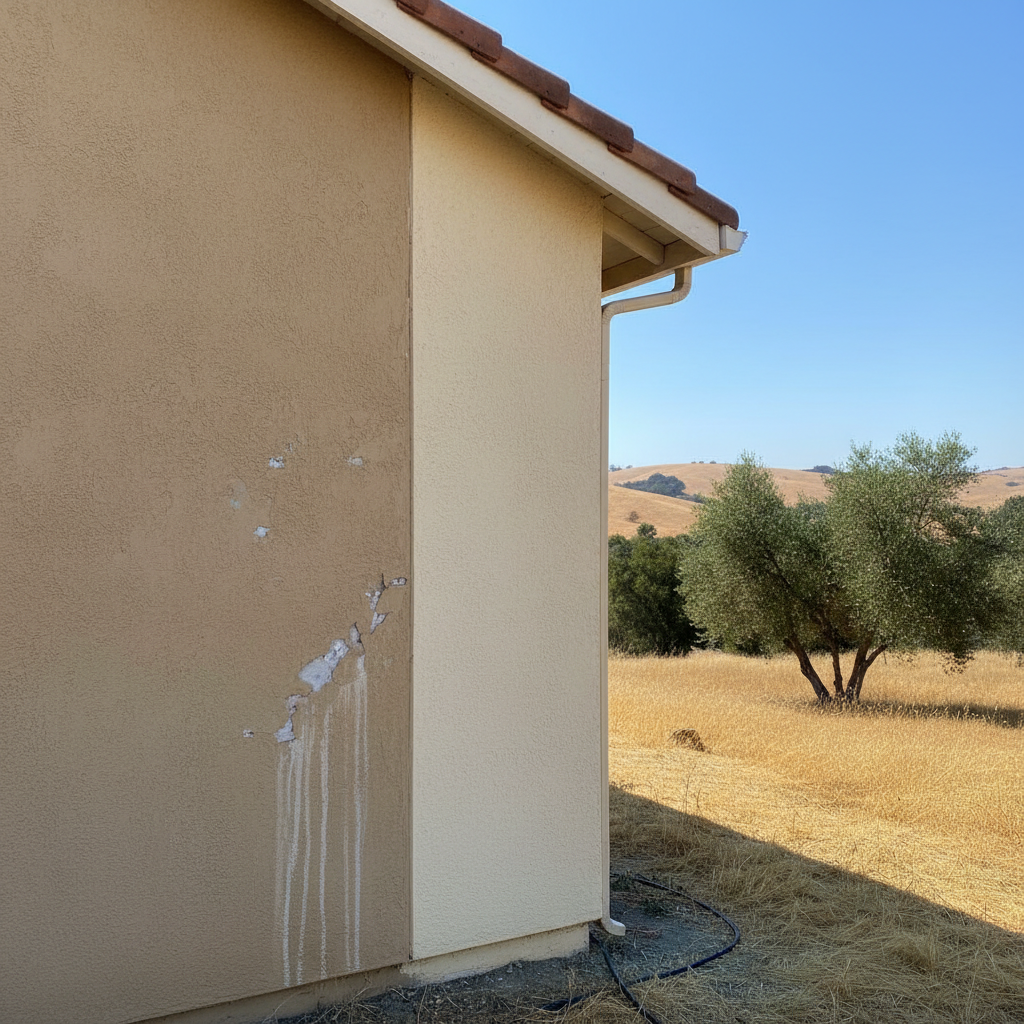
Your Stucco has seen better days, and you are thinking about replacing it. You might have widespread cracking, water damage, or you just want a fresh look for your property. This is an important decision, and there are two main ways to approach it: the Traditional 3-Coat Stucco system, and the more modern One-Coat Stucco system. As a contractor who has been working on homes all over Vallejo, from the older properties in the South Vallejo hills to the newer builds near Hiddenbrooke, we have seen both systems installed and how they hold up to our Bay Area climate. We will discuss what you need to know to make the correct choice for your home.
Traditional 3-Coat Stucco: The Old Reliable
This is what most people imagine when they hear the word 'stucco.' It has been used for a very long time, and there is a good reason for that. It is a thick, solid system that uses three distinct layers applied over a Lath and paper setup. First, the Scratch Coat is applied; this layer is scored to give the next layer something to hold onto. Then the Brown Coat is applied, which builds up the thickness and provides a smooth, even surface. Finally, the Finish Coat goes on, giving you the color and texture you want for your home in Vallejo.
Cost
Generally speaking, Traditional 3-Coat Stucco tends to have a higher upfront installation cost. This is because it is a more labor-intensive process. There are multiple layers, and each one needs time to cure before the next one can be applied, meaning more days are spent on the job site. The materials themselves—sand, cement, and lime—are usually less expensive than the specialized blends used in One-Coat Stucco systems, but the labor adds up.
Durability
This material is very tough. Because it is thicker, usually around 7/8 to 1 inch, it handles impacts very well. You will not easily damage it with a stray basketball or a garden hose. It also stands up well to our hot Vallejo summers and those occasional wet winters. With proper maintenance, a Traditional 3-Coat Stucco system can last 50 years or more.
Maintenance
Maintenance for Traditional 3-Coat Stucco is straightforward: keep it clean, fix cracks promptly, and consider repainting every 10 to 15 years to keep it looking fresh and protected. Minor hairline cracks are common over time, especially with our temperature fluctuations in Vallejo, but they are usually easy to patch.
Appearance
You can get many different textures and colors with Traditional 3-Coat Stucco, from smooth to sand finish, dash, or even a heavy lace. It gives you that classic, timeless look that many homeowners appreciate. The main thing to know about its appearance over time is that its rigidity means it tends to show its age through more defined, sometimes spiderweb-like cracking.
One-Coat Stucco: The Modern Contender
One-Coat Stucco, sometimes called two-coat, is a newer approach; it is fundamentally different from Traditional 3-Coat Stucco. It is designed to be faster and often more budget-friendly initially. Instead of separate Scratch and Brown Coats, one thicker base coat is applied that combines those structural and leveling properties. This system often includes polymers and is typically applied over rigid foam insulation, which is a big benefit for energy efficiency in homes across Vallejo.
Cost
One-Coat Stucco generally has a lower upfront installation cost. Fewer application steps mean less labor time, which saves you money on the installation. The materials can be a bit more expensive per bag because they are specialized blends, but the labor savings often balance that out for homeowners in Vallejo.
Durability
One-Coat Stucco is durable, but in a different way than Traditional 3-Coat Stucco. Because it often incorporates polymers, it tends to be more flexible. This flexibility can be a good thing, as it makes it more resistant to hairline cracking caused by minor building movement or temperature fluctuations. However, it is generally not as impact-resistant as its thicker, harder counterpart. A hard hit can sometimes cause a larger, more noticeable crack or puncture because the cement shell is thinner, around 1/2 inch, and backed by soft foam.
Maintenance
Maintenance is similar to Traditional 3-Coat Stucco: keep it clean and fix cracks promptly. However, because of its polymer content and insulation, One-Coat Stucco systems can sometimes be more prone to mildew or algae growth in shaded, damp areas, especially during our wet Vallejo winters. A good cleaning with a pressure washer on a low setting, or a soft brush and mild detergent, usually takes care of it.
Appearance
Just like Traditional 3-Coat Stucco, you can get all the same textures and colors with One-Coat Stucco. It offers great design flexibility and can give a more modern look. The flexibility means it might show fewer cracks, but if it does get a significant impact, the damage can sometimes look a bit more 'plastic-y' or less natural than a crack in traditional cement stucco.
My Recommendation for Vallejo Homeowners
So, which system should you choose for your Vallejo home?
For most homes here in Vallejo, especially considering our climate with its seasonal temperature variations, marine moisture, and occasional seismic activity, I recommend **Traditional 3-Coat Stucco** for replacement projects.
- Durability and Impact Resistance: The sheer thickness and density of Traditional 3-Coat Stucco make it very resilient. It handles the bumps and scrapes of daily life better, and it is less likely to suffer significant damage from minor impacts. That is an important benefit for long-term reliability.
- Moisture Management: Both systems need proper installation. Traditional 3-Coat Stucco is a 'reservoir' cladding; it is designed to soak up some moisture and then let it dry out. With proper Flashing and Weep Screeds, which are important in our area, especially with the Bay breezes and occasional fog rolling in from the Carquinez Strait, it manages water well. This is vital for preventing hidden damage to your home.
- Repairability: If something does happen, patching and blending Traditional 3-Coat Stucco is generally easier because the material is consistent all the way through.
- Proven Track Record: This system has been the gold standard for a reason. It has been used to build many homes in California, and we have seen it last for 50, 60 years or more on homes in older neighborhoods with just a bit of upkeep.
Now, if energy efficiency is your absolute top priority and you are willing to be extra diligent about inspecting for and repairing impact damage, One-Coat Stucco can offer excellent insulation benefits because of the foam board. However, for overall robustness, ease of repair, and a proven ability to stand up to our local conditions year after year, Traditional 3-Coat Stucco is usually the smarter long-term investment for your Vallejo property.
No matter which route you choose, the most important thing is getting it installed correctly. A Stucco system is only as good as its installation. That is where Vallejo Stucco & Plastering comes in. We make sure the job is done correctly, from the weather-resistive barrier to the final finish, so your home is protected and looks great for many decades.