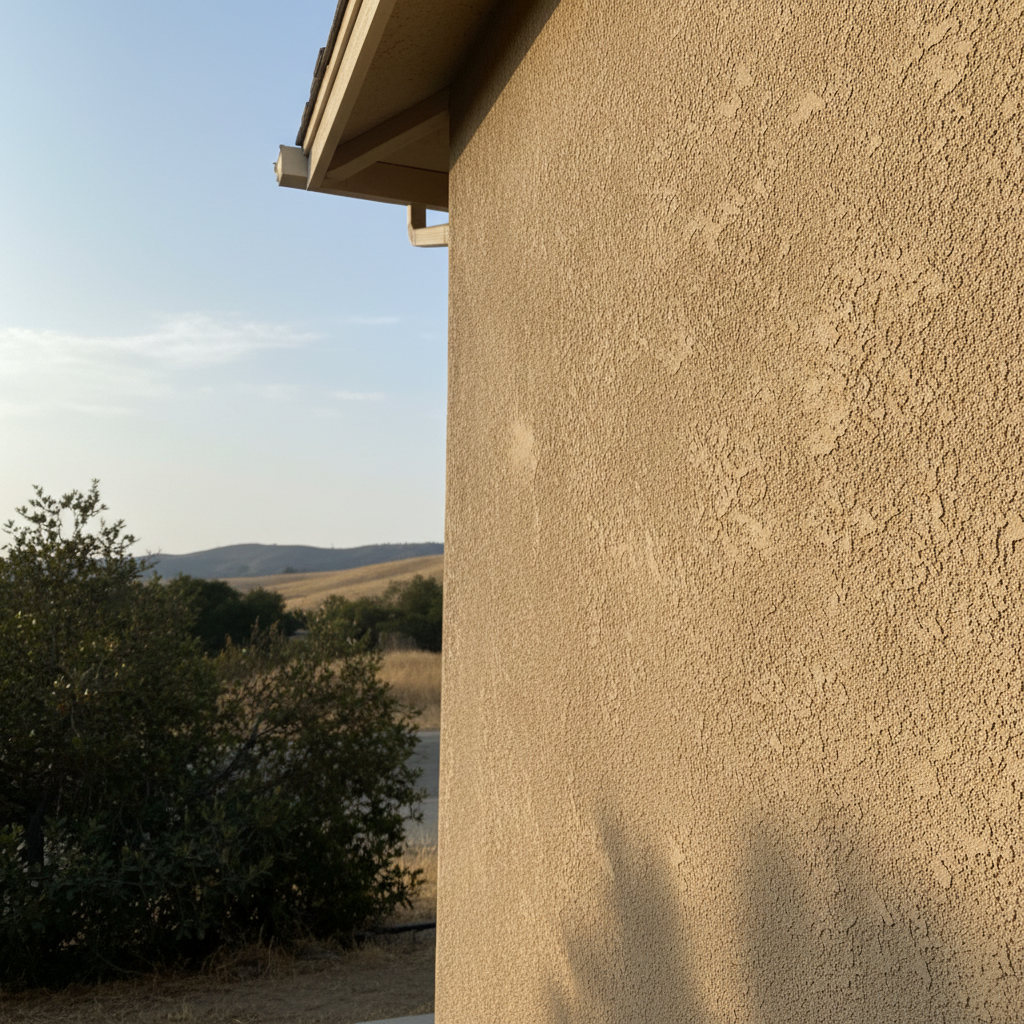
Ever walked around your house and actually looked at the walls? Most homeowners do not pay much attention to their exterior until a chunk falls off or water shows up inside. Down here in Vallejo, our mix of marine air rolling off the strait and the shifting clay soil puts your walls through a lot. Catching a problem early saves you a mountain of cash. Here is a straightforward breakdown of how to check your stucco, what you can handle yourself, and when it is time to bring in Vallejo Stucco & Plastering to take a look.
Before You Start: Getting Your Gear Ready
You do not need a fancy toolkit to check your exterior. Grab a notebook, a flashlight, and a blunt metal object like a coin or the back of a screwdriver. Pick a dry afternoon when the sun hits the walls at an angle because shadows make hairline cracks and bulges much easier to spot. Walk the entire perimeter of your house, keeping an eye out for anything that looks out of place.
What You Can Check Yourself
You can easily handle the initial visual walk-through and a few basic tactile tests. Start by looking for cracking. Hairline cracks no wider than a credit card happen naturally as a home settles, especially on older properties over Vallejo expansive soils. Tap gently near any cracks with your coin. A solid thud means the stucco is still firmly bonded to the lath underneath. A hollow sound means that the plaster has delaminated from the wall.
Check around your windows and doors, too. Caulking shrinks and fails over time, letting rainwater slip right behind the finish. Look closely at the base of your walls where the stucco meets the foundation. Make sure the weep screed is not buried under flower beds or new concrete paths, because that little metal track is what lets trapped moisture escape.
When to Call a Pro
If you tap the wall and hear a hollow echo across a large area, step back and call a professional. The same goes for wide cracks, rust stains bleeding through the finish, or any spots where the stucco feels spongy or soft to the touch. Rust means the internal metal lath is corroding from moisture intrusion, which compromises the whole structural skin of the house. Vallejo Stucco & Plastering has the tools to test for hidden moisture and trace leaks back to their source.
After Your Inspection: Next Steps
If you find minor hairline cracks, you can seal them up with a quality elastomeric patching compound once the rainy season clears out. For larger structural cracks, missing chunks, or widespread hollow spots, do not try a DIY fix with hardware store buckets. Getting the mix and the layers right takes a practiced hand. Keep an eye on your exterior twice a year, once before the winter rains hit and once after the summer heat, and your home will stay solid for 15 to 20 years or more.